
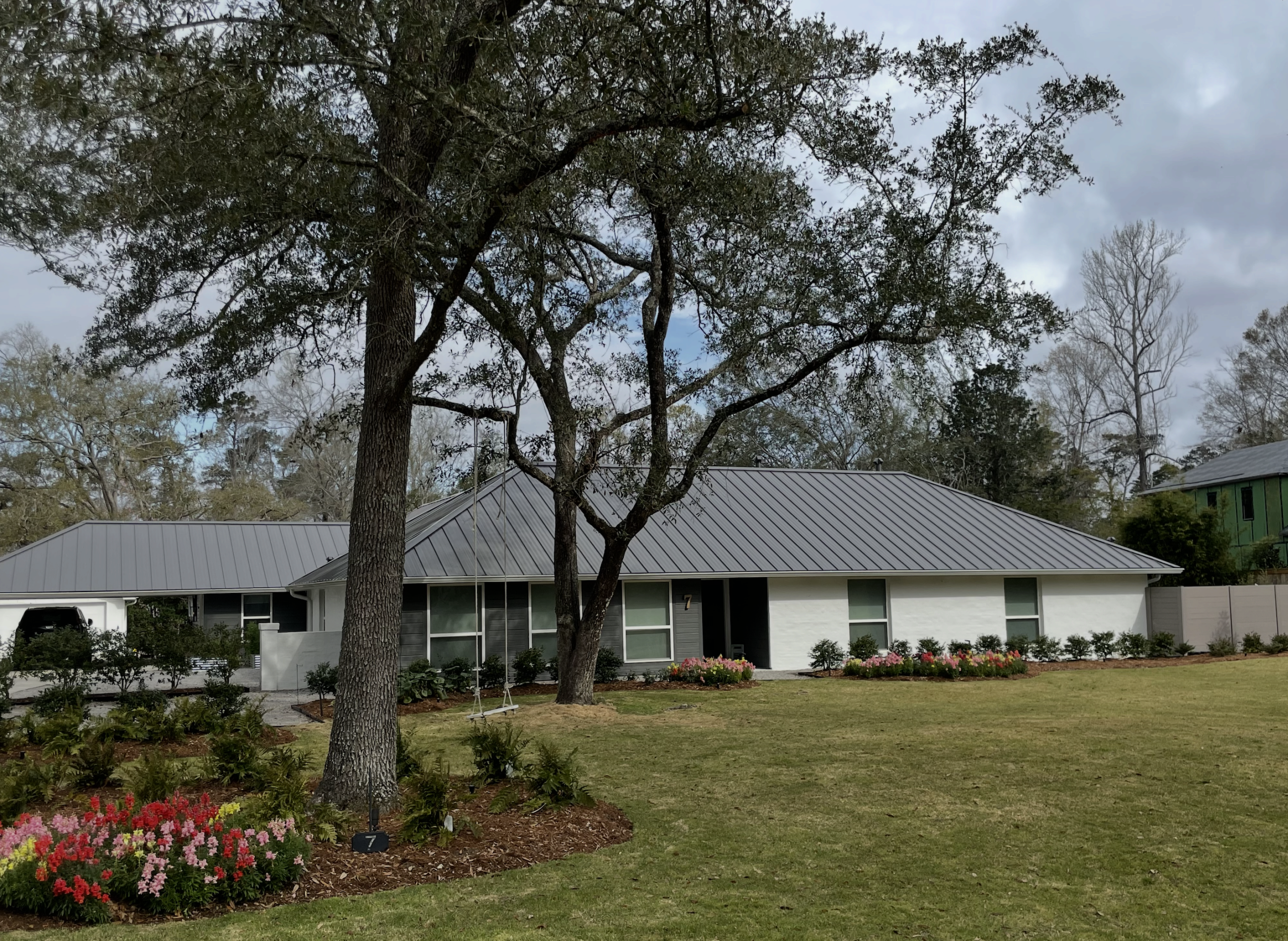
Hurricane season officially starts June 1 in Louisiana, but if you wait until June to start thinking about your roof, you are already behind. In St. Tammany Parish, the window between “weather is fine” and “Category 2 is making landfall near Slidell” can be less than 72 hours. By then, roofing contractors across the Northshore are fully booked, lumber prices spike, and any pre-existing issue on your roof turns into a much bigger problem.
This checklist is for Northshore homeowners who want to get ahead of the season rather than scramble during it. Not every item costs money. Most of this is inspection work you can do yourself or have done during a free estimate visit. The ones that do require a contractor are worth scheduling before the busy season starts in late May.
Start With a Roof Inspection Before June 1
The first thing to do is get eyes on the roof before anything else. A lot of homeowners skip this because the roof looks fine from the driveway. That is not a reliable read. Granule loss on asphalt shingles, lifted flashing around chimneys and pipe boots, soft spots in the decking, and small gaps near ridge caps are all invisible from street level but are exactly what lets water in during a storm.
You have two options here. One is hiring a licensed roofing contractor for a professional inspection. In Louisiana, Act 422 requires residential roofing contractors to be licensed through the LSLBC as of January 1, 2026, so verify that before anyone gets on your roof. The other option is a visual walkthrough from the ground and through the attic yourself, which can catch obvious problems even if it does not replace a professional look.
What to look for during inspection:
During a roof inspection before hurricane season, focus on these specific areas:
Shingles and surface: Look for missing shingles, cracked shingles, curling edges, and any spots where granules are visibly absent. Granule loss accelerates once it starts because the asphalt layer underneath has no UV protection. In Louisiana heat, a shingle with exposed asphalt can blister and crack within a single summer.
Flashing: Flashing is the metal seal around chimneys, skylights, vents, and anywhere the roof plane changes direction. This is one of the most common failure points during wind events. Flashing that has lifted even slightly will let water underneath the shingles during heavy rain driven by 60 mph gusts.
Ridge caps: The ridge cap runs along the top of the roof and takes more wind load than any other part of the surface. Loose or damaged ridge cap shingles are one of the first things to go in a storm.
Pipe boots and penetrations: Every pipe that comes through your roof has a rubber boot around it. Those boots crack with age and Louisiana UV exposure. When a cracked boot meets a tropical rain event, you get water in your walls.
Soffit and fascia: These are the boards along the roof edge and under the overhang. Damaged soffit allows wind to get under the roofline and create uplift pressure. This is a big factor in hurricane damage.
Attic interior: Look from inside the attic for any daylight coming through the decking, water stains on rafters, or soft spots. If you can see light, water can get through.
Address Repairs Before the Season Starts
After the inspection, prioritize anything structural first. That means decking issues, flashing problems, missing shingles, and loose ridge caps. Minor repairs done in April or May cost a fraction of what emergency repairs cost in August or September when every roofing crew in the Northshore is running back-to-back storm calls.
Common pre-season repairs Northshore homeowners deal with:
Shingle replacement for isolated damage: If you lost a few shingles last winter or have visible cracking from sun exposure, spot repairs on asphalt shingle roofs are straightforward. Get them done before the season. A few missing shingles is not a crisis in March, but those same spots become a leak in a July storm.
Re-sealing or replacing flashing: Flashing repairs are relatively low cost but have an outsized impact on storm performance. A roofer can re-seal loose flashing or replace corroded sections in a few hours.
Soffit and fascia repairs: This one gets overlooked because it feels cosmetic. It is not. Intact soffit keeps wind from creating uplift pressure under the roof deck. It is worth fixing before the season starts.
Ridge cap replacement: If ridge caps are old or loose, replace them before a storm tests them. Metal ridge caps hold up better than three-tab shingle caps in high wind and are worth the upgrade if you are already up there.
If your roof is over 20 years old and has multiple problem areas, a full inspection report can tell you whether you are better off with targeted repairs or a full replacement before the season. Some older shingle roofs in the Covington and Abita Springs area were installed before current wind-rating standards and do not perform the same way a newer roof would in a named storm.
Clean and Inspect Your Gutters and Downspouts
Gutters are not glamorous, but a clogged gutter system during a tropical rain event is a serious problem. Louisiana’s pine trees drop needles and debris year-round, and the Northshore gets enough canopy cover that gutters fill up faster here than in more open areas.
Before hurricane season, clean all gutters completely and flush the downspouts to confirm they are draining freely. Check that gutters are securely attached to the fascia boards. During high winds, a partially detached gutter section can pull away from the house and create an entry point for water or cause damage to the roofline.
Also check that downspouts discharge at least four to six feet away from the foundation. In a heavy tropical rain event, the volume of water coming off a roof is significant. If it is pooling against your foundation, you can end up with water in the crawlspace or basement in addition to the roof situation.
If your home does not have gutters or has older sectional gutters with multiple seam joints, this is a good time to look at seamless aluminum gutters. Fewer seams mean fewer leak points during the high-volume rain events that come with tropical weather.
Trim Trees Near the Roof Line
Tree damage is one of the most common causes of roof damage in Northshore storm events. The big live oaks and pines around Covington, Mandeville, and Abita Springs are beautiful but they drop branches in high wind. A branch that falls on a shingle roof can punch through the decking. A full tree limb landing on a standing seam metal roof can deform panels and break seam integrity.
Before hurricane season, walk the perimeter of your home and look for branches that hang over the roof or extend within 10 feet of it. Have a licensed arborist or tree service trim those branches back before June. Do not do it yourself from a ladder against the roofline. It is not worth the risk.
Pay particular attention to any trees that have dead limbs, show signs of disease, or have root systems that look compromised. A stressed tree in a tropical storm is a much bigger hazard than a healthy one.
Know Your Roof’s Wind Rating
This is something most Northshore homeowners do not know, and it matters a lot when a hurricane is approaching. Different roofing materials have different wind uplift ratings, and those ratings vary by how the roof was installed.
Standard three-tab asphalt shingles typically carry a 60 mph wind rating. Architectural shingles with enhanced adhesive strips can reach 110 to 130 mph. Properly installed metal roofing can handle 140 mph or higher, depending on the gauge and fastening pattern.
If your current roof is older or installed with standard materials, your home is more vulnerable to uplift failure in a Category 2 or 3 event. This is one of the main reasons the FORTIFIED Roof program exists.
FORTIFIED Roofing and what it actually means for Northshore homes:
FORTIFIED is a building standard developed by the Insurance Institute for Business and Home Safety (IBHS). It requires specific installation practices around three areas that are the most common failure points in hurricane wind events: how the roof deck attaches to the framing, whether the deck is sealed to prevent water intrusion if shingles are lost, and how the edges of the roof are reinforced against uplift.
A FORTIFIED Roof designation does not just mean the roof will hold up better in a storm. It also qualifies homeowners for insurance discounts in Louisiana, which can be significant. Louisiana has one of the highest homeowner insurance markets in the country right now, and FORTIFIED certification is one of the few concrete ways to reduce that cost.
If you are already replacing a roof for age or storm damage, upgrading to FORTIFIED standards at the time of installation adds relatively little to the total project cost compared to the insurance savings over time. For homes in the St. Tammany Parish area, the Covington zip codes, and along the Northshore in general, it is worth asking any contractor you hire whether they are IBHS-certified to complete FORTIFIED Roof installations.
Legends Roofing is a certified FORTIFIED Roof contractor serving the Northshore area. You can learn more about what that installation process involves at Legend Roofing
Check Your Attic Ventilation
This one is easy to forget but has real impact during storm prep. Proper attic ventilation regulates temperature and moisture inside the roof assembly. When attic ventilation is blocked or insufficient, heat and moisture build up between the decking and the insulation. Over time, this degrades the decking from inside before any storm ever arrives.
Before hurricane season, check that soffit vents are not blocked by insulation and that ridge vents are clear. In older Northshore homes, attic ventilation was often undersized by today’s standards. A roofer inspecting your roof pre-season can tell you whether you have the right ratio of intake to exhaust ventilation.
Pull Your Insurance Policy and Know What It Covers
Before any storm arrives, sit down with your homeowner’s insurance policy and read the section on wind and storm damage. Specifically, you want to know:
What is your wind deductible? Many Louisiana policies have a separate wind and hail deductible that is a percentage of the insured value rather than a flat dollar amount. On a $300,000 home, a 2 percent wind deductible means you pay $6,000 before insurance covers anything.
Is your roof covered for replacement cost or actual cash value? Replacement cost pays what it costs to replace your roof today. Actual cash value subtracts depreciation. On a 15-year-old shingle roof, actual cash value can leave you significantly short of what a new roof actually costs.
Are there any exclusions for pre-existing damage? If your roof already had known issues before a storm hit, an adjuster may try to attribute part of the damage to deferred maintenance rather than the storm event. This is why documenting your roof condition before the season matters. If you have a recent inspection report showing the roof was in good condition prior to a storm, that documentation protects you during the claims process.
Louisiana has specific assignment of benefits protections worth understanding. Act 62 established the voluntary Louisiana Roof Registry, and Act 239 requires permits for roofing work performed after August 1, 2025. If a contractor pulls a permit for pre-storm repair work, that creates a documented record of your roof’s condition.
Prepare Your Emergency Materials List
Before a major storm, you want to have the following on hand or at least know where to get them quickly:
Tarps: At least two 20×30 tarps with grommets, stored in a dry location. After a storm, emergency tarping is the first line of defense against water intrusion before a repair crew can get to you. Tarps go fast at Lowe’s and Home Depot when a storm is tracking toward the Northshore.
Contractor contact: Have the number for a licensed roofing contractor you have already vetted saved in your phone. After a named storm, out-of-state contractors flood into Louisiana. Some are legitimate. Many are not. If you already have a relationship with a local contractor who knows your roof and your property, you are in a much better position.
Insurance adjuster contact: Know how to reach your insurer’s claims line directly. After a major storm, call volumes spike and wait times are long. Having the claims number and your policy number accessible without digging through paperwork saves time when time matters.
After a Storm: What to Do First
If your area takes a direct hit or serious wind event, the checklist does not end when the storm passes.
Stay off the roof immediately after a storm. Wet shingles are slippery, debris is unpredictable, and you cannot assess structural integrity without training. Your safety is not worth a visual check you could get with binoculars or a drone image.
Document everything before any cleanup begins. Take photos and video of the roof from the ground, of any interior water intrusion, of any damaged gutters or soffit, and of the yard debris around the house. Do this before you move anything. This documentation is what your insurance claim is built on.
Call your insurance company before you call a contractor. You need to open a claim first. A contractor can help you with temporary emergency repairs to prevent further damage, and insurers generally allow and expect this, but you want the claim open and documented before any permanent repair work begins.
Watch for storm chasers. After major storms in the Northshore area, out-of-state roofing crews show up in neighborhoods offering free inspections and asking homeowners to sign over insurance rights. Louisiana law restricts assignment of benefits in roofing contracts. Read any paperwork carefully and do not sign anything that transfers your claim rights to a contractor.
Quick Reference: Pre-Season Roof Checklist
Here is the full list in one place:
Schedule a professional roof inspection before June 1
Check shingles for cracking, curling, granule loss, or missing sections
Inspect all flashing points: chimney, vents, skylights, pipe boots
Look at ridge caps for looseness or damage
Clean all gutters and flush downspouts
Confirm gutters are securely attached to fascia
Trim branches overhanging or within 10 feet of the roofline
Check attic ventilation for blockage or inadequate intake/exhaust ratio
Look at soffit and fascia for rot, damage, or gaps
Pull insurance policy and confirm coverage type, wind deductible, and pre-existing damage exclusions
Store tarps and have contractor contact saved before any storm warning is issued
Know your roof’s current age and wind rating
Ask about FORTIFIED Roof certification if you are planning any replacement work
When to Call a Contractor
If any part of your inspection turns up missing shingles, soft spots, lifted flashing, or visible water staining in the attic, do not wait. Small repairs handled in April or May take an hour or two. The same problems ignored until after a storm can mean weeks of work and a much larger insurance claim.
Legends Roofing serves the Northshore area including Covington, Abita Springs, Mandeville, Madisonville, Slidell, and the Mississippi Gulf Coast including Biloxi, Gulfport, and Bay St. Louis. We are licensed in Louisiana under Act 422 and are certified to complete FORTIFIED Roof installations through IBHS..